President Donald Trump and Republicans warned throughout the midterm election cycle that the modern Democrat Party was becoming far-left and socialist, but not enough voters bought the argument.
That includes Texas, where voters elected Democrats to federal and statewide offices for the first time in decades.
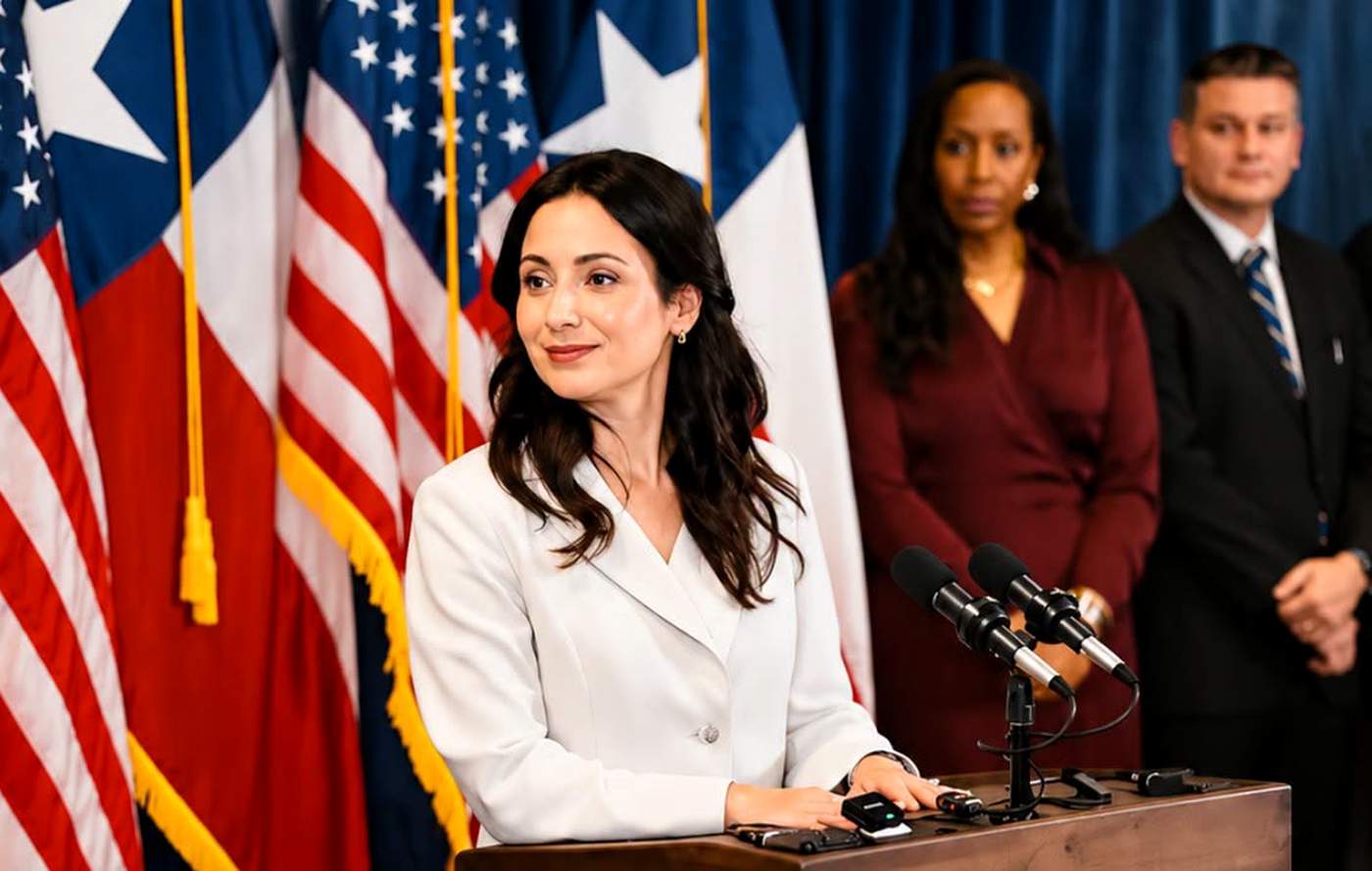
Texas Democratic Gov.-elect Gina Hinojosa says she will freeze residential electricity rates immediately after taking office, setting up a potential legal fight over the governor’s emergency powers.
Hinojosa, who defeated Republican Gov. Greg Abbott in last week’s election, has framed the proposal as an emergency response to rising household costs.
“On Day One as governor, I’ll freeze residential electricity rates and make corporations finally pay their fair share,” Hinojosa said while discussing her energy agenda.
She has offered an even more specific timetable for implementing the proposal.
“Within an hour of taking the oath of office, I will declare a high-cost emergency in the state of Texas and issue an emergency executive order to … freeze electricity rates,” Hinojosa told The Texas Tribune.
Hinojosa is scheduled to be sworn in Jan. 19, 2027.
Her campaign has said the freeze would remain in place until lawmakers enact policies requiring data centers and other large electricity consumers to cover more of the costs associated with their enormous power demands.
“As Governor, Gina will direct the Public Utility Commission to freeze the rates residential customers pay until we have laws to ensure that data centers and other high-load users pay for themselves,” her campaign platform states.
Whether a Texas governor possesses the authority to impose such a freeze without legislative approval remains unresolved.
What’s also true is that, anywhere they’ve been tried, government-imposed price freezes disrupt market balance between consumer demand and product supply, leading to shortages, less investment, and eventually, a failure of the system.
Texas largely deregulated its electricity market through Senate Bill 7, legislation enacted in 1999 that opened much of the state to retail competition beginning in 2002.
State law says electricity prices in competitive portions of the market generally should be determined by consumer choices and normal market forces rather than government rate regulation.
More than 100 retail electricity providers now compete for customers in deregulated areas of Texas.
Hinojosa appears prepared to rely on gubernatorial emergency authority rather than ordinary utility regulation to implement her freeze.
Nick Loris, president of the conservative energy and environmental organization C3 Solutions, questioned whether high electricity prices would legally qualify as the type of disaster allowing a governor to exercise those powers.
“The Texas Disaster Act lets the governor declare disasters and suspend the regulatory laws and statutes that are in existence,” Loris told Fox News Digital.
“But I think there is a high degree of skepticism, both from courts but also from state policymakers, that this warrants such a claim — and that it is such a disaster,” Loris added.
Loris said electricity companies affected by the order would be among the parties most likely to challenge it.
“I would imagine if there were legal challenges, it would come from those affected parties,” he said.
A disaster declaration generally expires after 30 days unless renewed by the governor, while the Legislature can terminate a declaration through legislation.
The Texas Disaster Act includes an “energy emergency” among circumstances that can trigger emergency powers, although the statutory definition focuses on temporary shortages of petroleum, natural gas or liquid fuels.
Hinojosa has not publicly identified the specific statutory provision she believes gives her authority to freeze competitive residential electricity prices.
The incoming governor could also face resistance from the Legislature.
Democrats captured the Texas House during the midterm elections, but Republicans retained control of the state Senate, creating divided government when Hinojosa takes office.
Republican state Rep. Brian Harrison has already urged Abbott to call lawmakers into a special session before leaving office to restrict gubernatorial emergency powers.