Vice President JD Vance said Thursday that the top US priority in the Iran war was keeping oil and gasoline prices low for Americans, with preventing Tehran from acquiring a nuclear weapon ranking second.
The remarks contrasted with President Donald Trump’s repeated framing of the fight: that entering the war had the sole objective of preventing Iran from acquiring a nuclear weapon, even if that meant short-term economic sacrifices for Americans.
Vance’s comments also underscored the growing reality that the war now centers on control of the Strait of Hormuz, which Iran has forced to the top of the negotiating agenda.
“I know that oil is down today and it’s way down from the highs in the early days of the conflict,” Vance said on Fox News.
“That’s goal number one — keep oil and gas cheap for Americans all over our country.”
“And then obviously goal number two is ensure that Iran never gets a nuclear weapon,” he added.
The vice president has been among the members of the administration most skeptical of the offensive launched against Iran in late February.
His latest remarks, however, appear to confirm the more cautious approach now favored by the US president, which involves maintaining strong economic pressure on Iran while a military standoff in the Strait of Hormuz persists.
“Sometimes we’re focused on the energy piece of it because we want Americans to be able to afford the price of oil and gas. Sometimes we’re obviously focused on the military… on the nuclear program,” Vance also said.
Vance added that Trump was “at the height of his authority with a lot of tools — diplomatic, military and economic.”
The decision to focus on economic pressure comes as the diplomatic path appears blocked, with both Washington and Tehran sticking to their conditions for reopening the strait.
Regarding his military options, US media report that Trump must contend with rapid depletion of stocks of certain missiles and drones.
Iran backs off on decision to raise gasoline prices
Iran has put a decision to raise gasoline prices on hold, according to Fars news agency, citing government sources.
Mohammad-Saeid Ahadian, an adviser to the parliament speaker, said the heads of Iran’s three branches of government had decided that gasoline prices would not increase.
“Proposals that do not involve an increase in gasoline prices are being considered,” Ahadian said in a post on X.
He urged government officials to avoid actions that could raise public concerns about higher fuel prices.
Iran’s economy has faced mounting pressure from US sanctions and the reported naval blockade of Iranian ports.
Iran says it shot down US MQ-9 drone
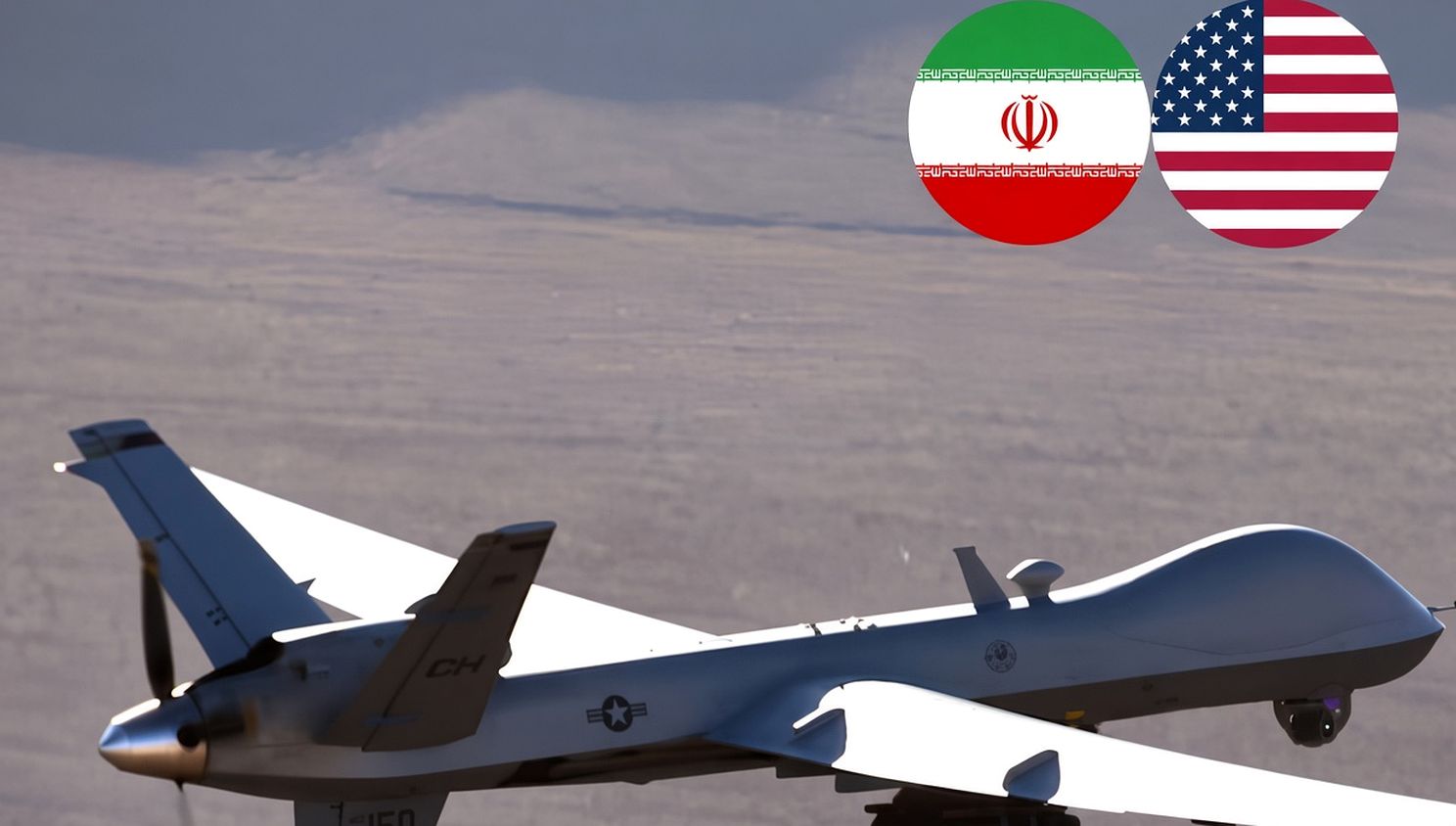
Iranian state television reported that Iran’s Islamic Revolutionary Guard Corps air defenses detected and shot down a US MQ-9 drone in Hormozgan province.
Only 13 vessels crossed Strait of Hormuz on Thursday, says maritime intelligence firm
Only 13 vessels crossed the Strait of Hormuz on Thursday, according to maritime intelligence firm Kpler, highlighting the continued disruption to traffic through the strategic waterway.
The figure was a slight increase from the nine vessels recorded on Wednesday but remains far below normal levels.
The limited traffic also contrasts with repeated claims by US President Donald Trump earlier this week that the strait was “open” and under US control.
Of the 13 vessels that crossed on Thursday, nine followed a route approved by Iran that the US has warned ships against using. The remaining four switched off their tracking transponders, making their routes impossible to determine.
The risks facing vessels attempting to navigate the waterway were underscored Thursday night when the Abu Dhabi National Oil Company (ADNOC) said two of its ships had been attacked in the strait.
The Strait of Hormuz is a critical global energy corridor, carrying a significant share of the world’s oil and gas shipments.
The International Energy Agency warned Wednesday that the need to restore traffic through the strait was becoming increasingly urgent as countries draw down their oil stockpiles, despite a recent decline in global oil prices.
Iranian exports skyrocket through its border with Turkiye
Iran’s export trade through the Razi border with Türkiye rose nearly 300% in the first four months of this year compared with the same period in 2025, Iranian officials said.
Ali-Asghar Abdollahi, acting head of the Razi Customs Office, told Fars news agency that exports through the border reached $217 million, with goods weighing about 440,000 tonnes.
Abdollahi said 8,975 train wagons crossed the Razi border during the period, marking a 205% increase year on year.
He added that customs revenues rose by about 800%, with more than 652 billion Iranian rials collected.
The Razi crossing links Iran’s Khoy with Türkiye’s Kapikoy and is Iran’s only rail border connecting the country with Europe.
GCC condemns attack on ADNOC vessels in Strait of Hormuz
Gulf Cooperation Council Secretary General Jasem Mohamed Albudaiwi has condemned an Iranian attack on two tankers operated by ADNOC in the Strait of Hormuz.
In a statement, Albudaiwi said the GCC “strongly condemns the brutal Iranian attack,” warning that repeated attacks on navigation, facilities and property represented “an unacceptable escalation and a grave violation of international law.”
‘Islamabad MoU is only way forward,’ says Pakistan’s deputy PM
Pakistan’s Deputy Prime Minister and Foreign Minister Ishaq Dar told US Chargé d’Affaires Natalie Baker that implementing the Islamabad Memorandum of Understanding “in letter and spirit is the only way forward.”
According to a statement from Dar’s office, the two officials discussed Pakistan-US bilateral cooperation and recent regional developments.
Dar welcomed what he described as a positive trajectory in bilateral relations and stressed the importance of dialogue and diplomacy in achieving lasting peace.
Baker, meanwhile, praised Pakistan’s “constructive role” in promoting regional peace and stability, the statement said.
Iran grants ‘general approval’ to strategic action plan for the Strait of Hormuz
Iran has approved the general outline of a strategic action plan aimed at managing the Strait of Hormuz, according to a senior Iranian official cited by Tasnim news agency.
Valiullah Bayati, spokesperson for the Parliamentary Committee on Councils, said the committee reviewed the plan and approved its general principles after considering members’ views.
One provision would prohibit vessels and equipment owned by the US, ‘Israel’ and other countries Tehran considers “hostile” from passing through the Strait of Hormuz.
Bayati said the measure was linked to what he described as hostile actions and “aggressive acts” by those countries against Iran.
The plan’s approval comes amid heightened tensions surrounding the strategic waterway, through which a significant share of global oil shipments passes.
Vessel struck by drone in Strait of Hormuz, says UKMTO
A tanker was struck by an uncrewed aerial vehicle while making an outbound transit of the Strait of Hormuz on Thursday, the United Kingdom Maritime Trade Operations agency said.
The vessel sustained minor damage, while all crew members were reported safe and accounted for. No environmental impact was reported.
USS Abraham Lincoln to be replaced, Bessent signals US to choke Iran economy
Treasury Secretary Scott Bessent said Thursday that Washington will continue efforts to economically isolate Iran and blockade its ports, warning that the measures could be unlike anything seen before.
His remarks followed President Donald Trump’s statement Sunday that inflicting economic pain on Iran was part of his strategy.
Meanwhile, the US is sending another carrier group to the Middle East to replace the USS Abraham Lincoln, according to a US official cited by CNN. The official said the deployment swap had been planned previously.
The Lincoln has faced concerns from sailors’ families over living conditions and the crew’s mental health during its extended deployment for the Iran war.
Defense Secretary Pete Hegseth rejected those concerns, saying conditions aboard the carrier had been “completely misrepresented.”
US threatens Iran with “economic isolation, like the world has never seen”
US Treasury Secretary Scott Bessent threatened Thursday to subject Iran to economic isolation “like the world has never seen before,” adding that new measures are expected next week.
“It will be a combination of economic isolation, like the world has never seen before,” Bessent told conservative television network Newsmax, adding that “the continued blockade in the Strait of Hormuz… will keep anything from going in or out of the Iranian ports.”
US to rotate aircraft carriers in Middle East amid Iran war
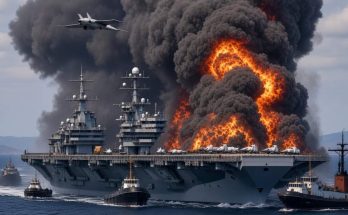
The US Navy is preparing to send the aircraft carrier USS George Washington to the Middle East to relieve the USS Abraham Lincoln, which has been at sea for more than 250 days amid the ongoing war with Iran, according to multiple reports in US media.
The George Washington, the Navy’s only forward-deployed carrier based in Japan, recently completed a port call in Da Nang, Vietnam, and has been operating in the South China Sea.
Open-source tracking and Navy statements indicate the carrier, accompanied by a cruiser and destroyer, has transited the Singapore Strait and entered the Strait of Malacca, placing it on course for the Indian Ocean and ultimately the Arabian Sea.
Officials described the swap as part of a previously scheduled rotation rather than a direct response to recent concerns about conditions aboard the Lincoln.
The office of the Chief of Naval Operations declined to discuss plans for either carrier, citing operational security.
The Lincoln, which departed San Diego in November 2025 and was redirected to the Middle East in January ahead of US and ‘Israeli’ operations against Iran, has played a central role in the campaign known as Operation Epic Fury and the subsequent naval blockade of Iranian ports in the Strait of Hormuz.
It is one of two US carriers currently in the region, alongside the USS George H.W. Bush.
The Lincoln’s deployment has stretched far beyond its original schedule, with the ship logging roughly 200 consecutive days without a port call—a modern record for a US aircraft carrier.
Crews typically expect port visits every 30 to 45 days.
Families of the roughly 5,000 sailors and Marines aboard have raised alarms about shortages of food and hygiene products, plumbing problems, water issues, exhausted personnel, and reports of multiple attempts by sailors to jump overboard.
Sen. Richard Blumenthal (D-Conn.) wrote to Defense Secretary Pete Hegseth and Acting Secretary of the Navy Hung Cao this week, citing “widespread reports of shortages of basic supplies, water contamination, plumbing issues, deteriorating mental health, deck safety concerns, and disruptions in the mail system, which have caused many care packages en route to the ship to be lost in transit for months.”
Rep. Marlin Stutzman (R-Ind.) said service members “have to have comfort knowing that they’re getting properly taken care of.”
Hegseth pushed back against the accounts while speaking to reporters in Panama, calling reports of poor conditions “completely misrepresented.”
He stated: “We make sure every ship, every crew, every captain has everything we can provide them at every single moment. Some deployments are longer than others, and I have more respect and gratitude for those sailors than anybody. What they do in those high seas in those austere conditions with less port calls—it’s incredible.”
A Navy official said the service had not observed an increase in suicidal ideations or attempts, noting the presence of chaplains, psychologists, and other mental-health personnel, and that leadership prioritized mission-critical supplies amid disrupted logistics in the contested environment.
The George Washington’s arrival is expected to allow the Lincoln to return to its San Diego homeport after months of high-tempo operations supporting the Iran campaign and the Hormuz blockade.
The rotation underscores the strain on the Navy’s carrier force as it sustains presence in the Middle East while managing commitments elsewhere, including the Indo-Pacific, where the departure of the Japan-based carrier will leave a temporary gap.