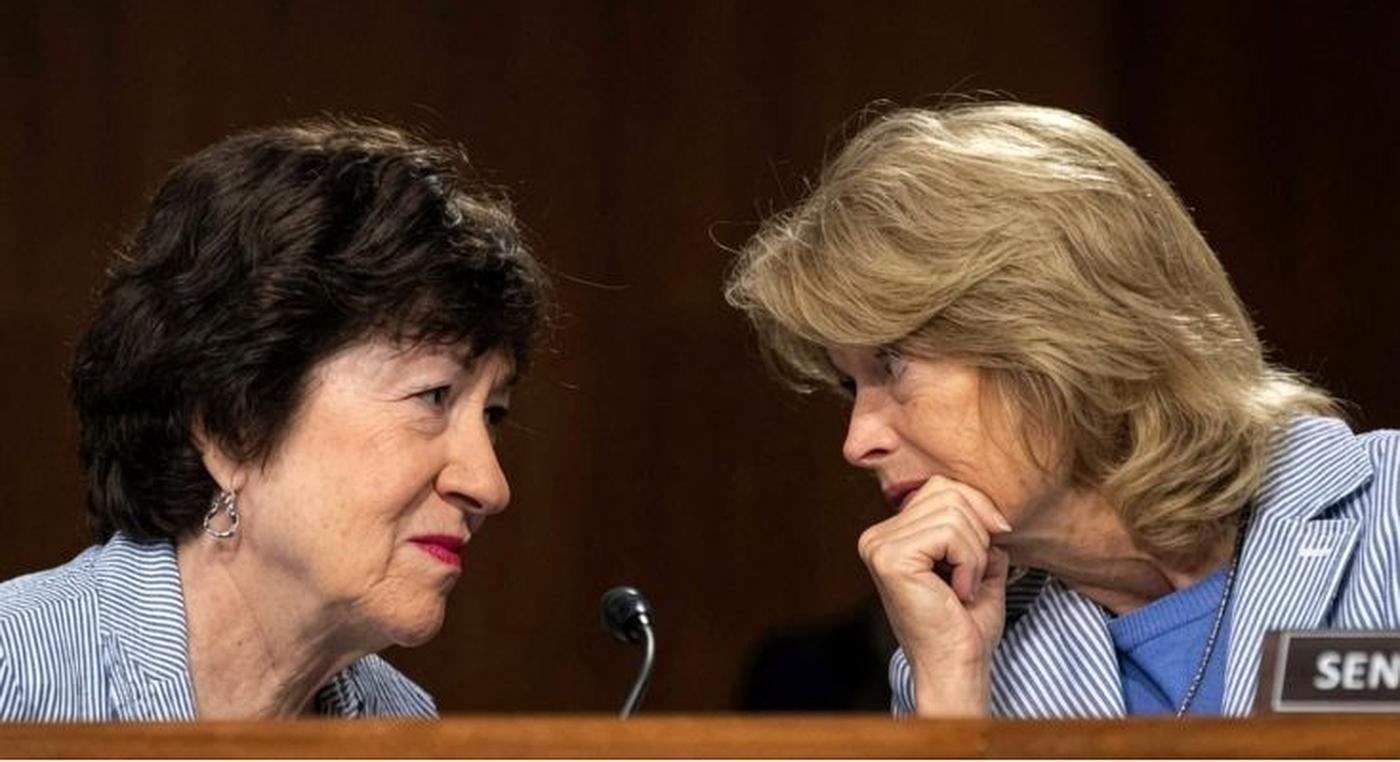
Sen. Susan Collins (R-Maine) broke with Senate Republican leadership on Thursday and sided with Democrats.
The procedural motion, offered by Sen. Jon Ossoff (D-Ga. ), sought to recommit the legislation to the Senate Judiciary Committee to investigate allegations that insurance companies have improperly denied medical treatment and coverage to patients.
Collins’ vote placed her at odds with most Senate Republicans, who opposed delaying the legislation and argued that the reconciliation package should continue moving through the legislative process without additional committee review.
The motion failed by a vote of 47 50
“Let’s ban insurance companies from denying or delaying medically necessary healthcare to Americans,” Ossoff said on the Senate floor when introducing his amendment.
He shared with fellow senators the challenges faced by a constituent diagnosed with multiple myeloma, a rare blood cancer, who struggled to get her medical care covered by her insurance company.
Across America, insurance companies continue to deny and delay medically necessary healthcare,” Ossoff added
Ossoff’s motion was similar to one he proposed during the Senate budget resolution in April, which aimed to create a point of order against any budget reconciliation bill that did not address insurance companies delaying or denying medical care, said the outlet.
Collins joined two other Republicans – Sen. Dan Sullivan (R-Alaska) and Sen. Josh Hawley (R-Mo.
) – in supporting Ossoff’s amendment in April, noted The Hill.
But Sullivan and Hawley both voted against the amendment on Thursday
If Ossoff’s motion had passed, it would have annihilated the budget reconciliation bill, which would provide funding for Immigration and Customs Enforcement and Border Patrol through 2029 if signed into law by President Trump, said The Hill.
In April, the Senate rejected a resolution that would have blocked President Donald Trump from ordering further military strikes on Iran, as concerns continue to grow among lawmakers about Congress’s role in the conflict.
The procedural vote failed 52 47, marking the latest attempt to rein in presidential war powers since the fighting began
Collins, a frequent Republican critic of Trump, voted against the resolution.
Still, Collins said the president’s authority is not unlimited and emphasized that Congress must play a role if the conflict continues beyond legal thresholds, The Washington Post reported.
I have been clear from the beginning of this military operation that the President’s power is not unlimited as Commander in Chief, as the Constitution gives Congress an essential role in matters of war and peace,” she said
The vote comes as lawmakers weigh support for a conflict that has faced growing scrutiny.
Trump threatened earlier in the month to destroy Iran’s “whole civilization” before later agreeing to a temporary two-week ceasefire.
Democrats have forced multiple votes under the War Powers Resolution of 1973 in an effort to limit the administration’s actions
All four attempts have failed to pass.
Sen. Rand Paul joined Democrats in supporting the resolution, while Sen. John Fetterman broke with his party to oppose it.
Sen. Jim Justice (R-W. Va.
) did not vote.
Despite opposing the resolution, some Republicans said they want Trump to consult Congress as the war approaches a key legal deadline
Under the War Powers Resolution, presidents must end military engagements not authorized by Congress within 60 days, unless granted an extension, but presidents of both parties have argued since its passage in 1973 that they believe it is unconstitutional.
Trump initially predicted the conflict would last only four to five weeks, but the timeline is now nearing that legal threshold.
He has sent mixed signals about the duration, saying earlier this week the war was “very close to over,” even as additional military actions continued
“The president recognized ahead of time when he first went into Iran that this was going to be a short-term thing, right? ” Sen. Lisa Murkowski said.
“We’re probably not going to be dealing with 60 days. Well, here we are,” she said.