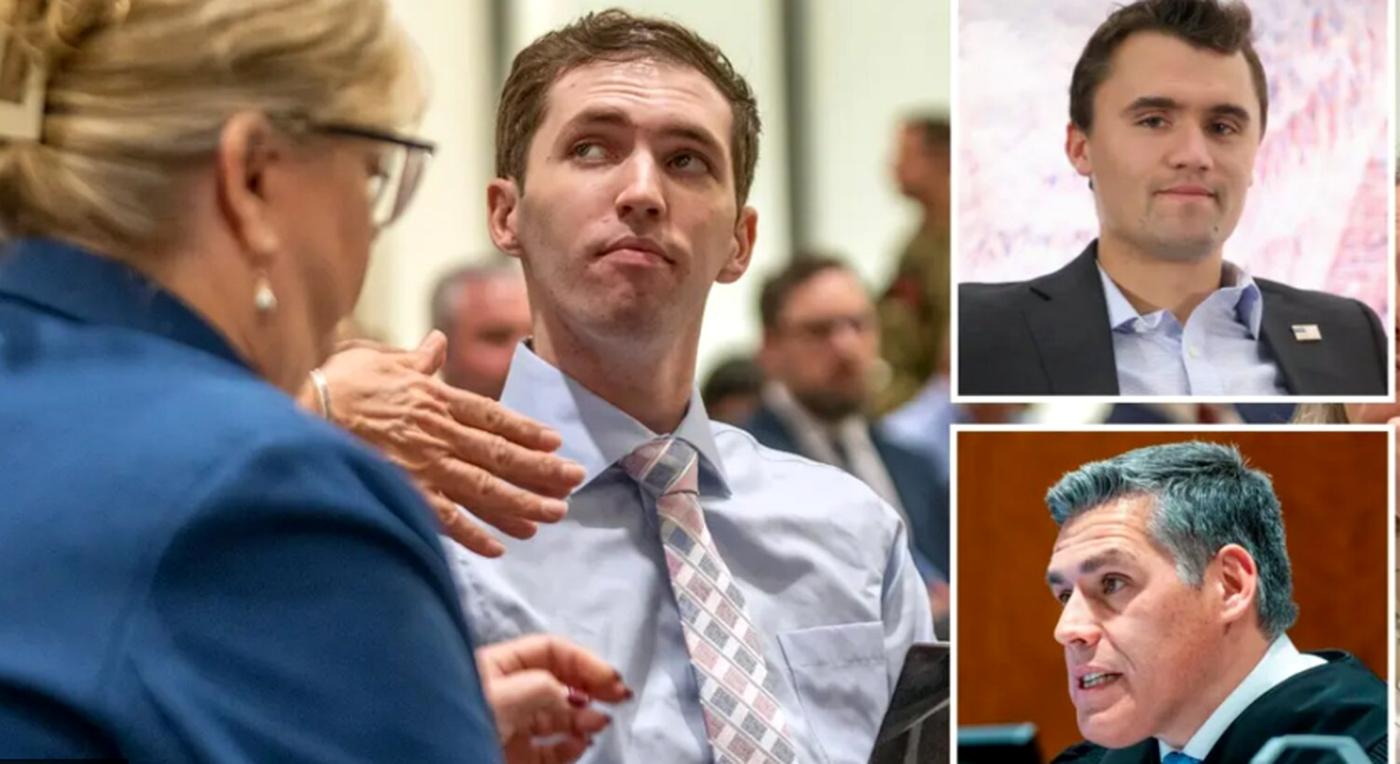
A judge in the trial of the man accused of assassinating Charlie Kirk on Monday rejected a defense plea to bar the public from a hearing that will outline most of the evidence in the case.
Advertisement
Robinson, 23, is charged with fatally shooting Kirk, the conservative activist, at a speaking engagement at a Utah college in September, and prosecutors are seeking the death penalty.
Robinson has not entered a plea
Advertisement
Robinson’s defense has tried to close further sessions in the Utah trial, keep motions and evidence under seal, and limit news coverage of the case, alleging that the high media interest will result in unfavorable publicity, prejudice potential jurors, and deny Robinson’s right to a fair trial.
His lawyers requested that the district judge in the case, Tony Graf, seal portions of a preliminary hearing scheduled for July
Advertisement
The hearing is intended to be a mini-trial, in which the prosecution will try to exhibit evidence against Robinson to convince a judge that there is probable cause to go to trial.
Judge Graf said Monday that Robinson’s lawyers had not shown that his fears about adverse publicity exceeded the public’s right to an open judicial procedure
The court also said law enforcement officials have already provided reams of information to the public regarding the killing of Robinson and Kirk and that the defense will get a chance to question potential jurors about their exposure to news coverage when the case gets to trial.
In December, the judge ruled that both the defense and prosecution must notify media representatives when a hearing will be closed but denied the media’s request to be granted formal party status in the case.
In March, Robinson’s defense team filed another motion seeking to bar cameras entirely from the courtroom, arguing that extensive media coverage has created bias and could interfere with his right to a fair trial, said the outlet
They also argued that media coverage of the case aimed to sensationalize the proceedings rather than serve a traditional journalistic purpose.
Attorneys on both sides in the case against Tyler Robinson have continued to dispute the role of media coverage in the courtroom.
But Graf ruled that cameras would be allowed in his courtroom for the April 17 hearing
“In balance, the defendant has not provided a sufficient basis for the court to find that the interests favoring closure outweigh the interest favoring an open proceeding and the presumptive right to access,” Judge Graf said during Friday’s hearing. He further noted that while the April hearing would generally be open, portions might be closed to protect privacy and safety concerns.
The defense had until March 30, 2026, to file a redacted version of their motion to keep cameras out of the courtroom. This would let them make arguments about certain closures.
The ruling on Friday cited the U.S
Supreme Court’s 1981 decision in Chandler v. Florida, which said that having cameras in the courtroom does not automatically violate a defendant’s right to a fair trial.
Graf argued that the decision struck a balance between the public’s right to know and the defendants’ rights. In the end, they rejected the defense’s claims that media coverage could bias potential jurors in this high-profile case.
Most recently, the defense filed a motion seeking to hold prosecutors in contempt, accusing them of engaging in a “willful media tour. ”