President Donald Trump on Tuesday unveiled America.gov, a single online front door to federal information and services, and signed an executive order requiring agencies to plug into it. The goal is simple to describe and hard to pull off: end the maze of government websites that Americans have been forced to navigate for decades.
The executive order is titled “Streamlining Access to Government Services Through America.gov.” It establishes a secure, conversational, AI-powered platform meant to serve as a unified digital front door to the federal government.

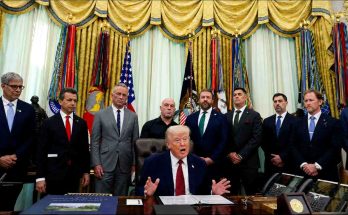
Trump announced the site at an event at Washington’s Andrew W. Mellon Auditorium, alongside Vice President JD Vance and a range of administration and industry officials. The day also included panel discussions on energy, health, space and agriculture, followed by a White House AI lunch with roughly 31 technology executives and government officials.
“With America.gov the federal government no longer stands in your way, it only stands at your service,” Trump said. It was a pointed contrast with the bureaucratic frustration most Americans know all too well.
The idea is that citizens tell the portal what they are trying to do, and it walks them through each step. Instead of guessing which agency handles what, users can ask in plain language and get a direct answer.
The White House says the site can already field questions and provide current answers. Axios reported it can help with tasks such as replacing a Social Security card, registering to vote, comparing Medicare plans and registering a business.
The platform is operated by the General Services Administration and was built by the National Design Studio, a White House team of design and technology experts. The order directs GSA, the National Design Studio and the Office of Management and Budget to run America.gov as the primary gateway for covered services.
Login.gov will serve as the authentication system. The three offices are directed to integrate it so that Americans can sign in once and move across services without juggling multiple accounts.

The order puts real teeth behind the effort. Agencies must identify which of their services qualify as covered, connect their existing public APIs, dashboards and digital forms to America.gov, and report usage and performance data to GSA and OMB.
Services with more than 100,000 users are the focus. Medicare enrollment and passport renewal are among the high-volume services slated to move onto the platform, with more to follow as agencies complete their integration.
The White House says the system uses modern technology and what it calls “Super Intelligence” to improve how the government serves the public, while preserving personal privacy. Google confirmed it is a technology partner, and CNBC reported the portal draws on Google’s Gemini and xAI’s Grok.
One notable carve-out stands out. Tax filing through the IRS is excluded from the order, so the most dreaded annual government chore stays where it is for now.
The administration also stressed that America.gov is not meant to eliminate existing ways of getting federal services. Americans who prefer to go in person or use an agency’s own site can still do so.
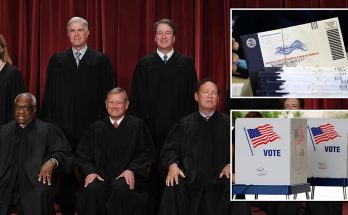
Then came the political twist. Trump tied the launch directly to election legislation, arguing that a simple, accessible portal undercuts the claim that proof of citizenship or a passport is too hard to obtain.
That argument is central to the push for voter ID and citizenship verification. If getting a passport or confirming citizenship becomes as easy as answering a few questions online, supporters say, the excuses for opposing election integrity measures start to crumble.
Trump also said he expects other countries to copy the model. He directed every federal agency to bring its public services onto the platform as soon as possible.