The Supreme Court ruled Tuesday against AT&T and Verizon in a closely watched dispute over federal penalties tied to the sale of consumers’ real-time location data.
The decision preserves the FCC’s authority to impose financial penalties through its administrative enforcement system.
It is a major victory for federal regulators seeking to police privacy violations in the telecommunications industry.
The case reached the Supreme Court after a split among federal appeals courts
Last year, AT&T persuaded the 5th U. S. Circuit Court of Appeals to throw out an FCC fine, arguing that the agency’s process improperly bypassed a jury.
Verizon, however, lost a similar challenge before the 2nd Circuit, creating conflicting rulings that prompted Supreme Court review.
Justice Clarence Thomas was the lone dissenter, ARSTechnica reported
Justice Clarence Thomas was the lone dissenter, ARSTechnica reported.
The ruling strengthens the federal government’s power to impose administrative penalties on companies accused of breaking telecommunications and privacy laws, while reducing a constitutional challenge that could have greatly restricted the enforcement powers of regulatory agencies.
The dispute stemmed from $104 million in FCC fines imposed on AT&T and Verizon in 2024 over allegations that the companies improperly handled customers’ real-time location data, conduct first brought to light in 2018, the outlet noted.
After paying the penalties, both companies challenged the FCC’s enforcement process in federal court, arguing that the agency’s system violated their Seventh Amendment right to a jury trial
Under the FCC framework, companies can pay a fine and seek review through the federal appeals courts rather than having the case initially decided by a jury.
The carriers contended that this process deprived them of a constitutional safeguard guaranteed in civil cases involving substantial financial penalties, ARSTechnica noted further.
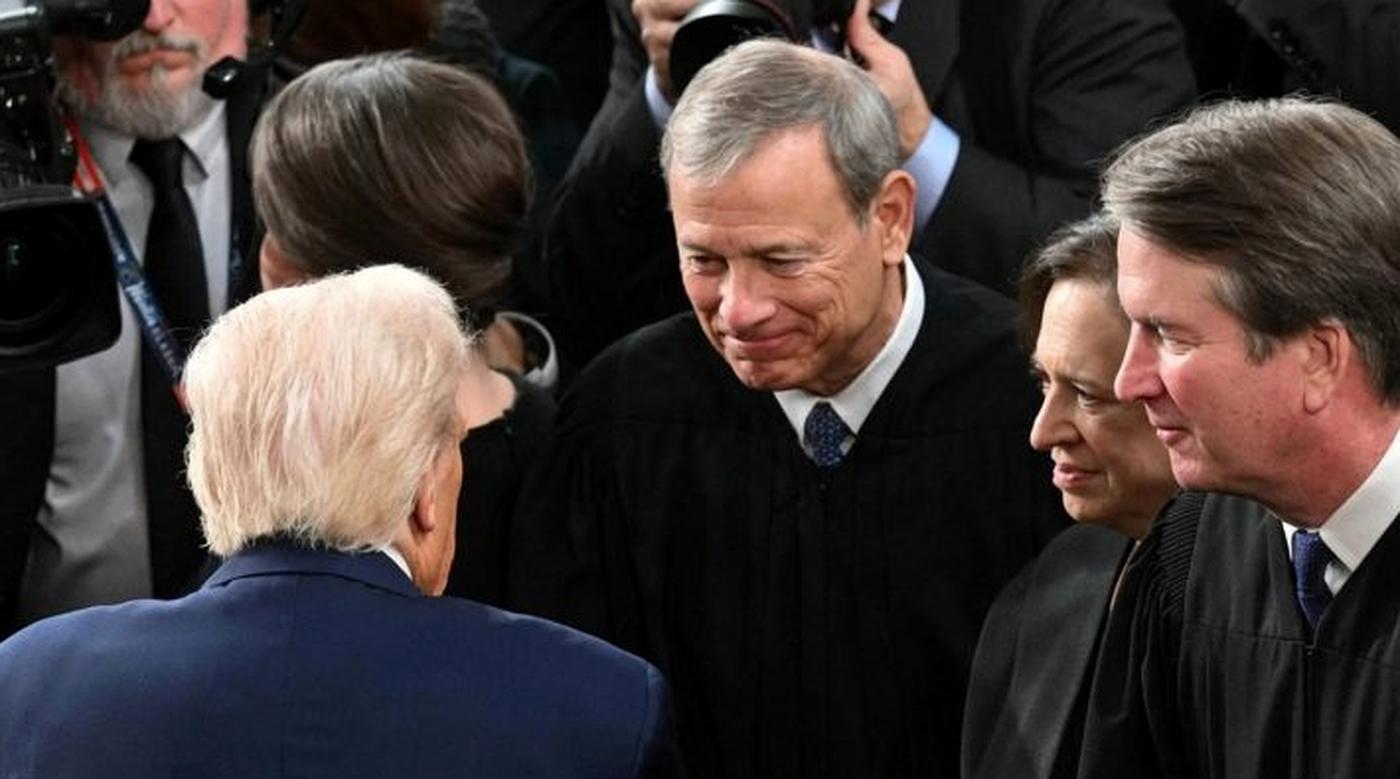
Writing for the Court’s majority, Chief Justice John Roberts rejected that argument, concluding that the companies were not denied access to a jury trial because an alternative path remained available to them
According to the Court, the carriers could have refused to pay the fines and forced the government to pursue collection efforts, a process that ultimately could have resulted in a jury trial.
“The FCC’s forfeiture proceedings fit comfortably within” the Supreme Court’s Seventh Amendment precedents, Roberts wrote.
The orders at issue did not settle the carriers’ legal obligations because, stated simply, they did not create an obligation to pay,” he went on
“And the orders did not reflect the ultimate determination of any fact because, before the carriers could have been made to pay, the Government was required to prove its case to a jury,” said the chief justice.
The outcome was foreshadowed during oral arguments, where several justices appeared unconvinced by AT&T’s and Verizon’s constitutional objections and suggested that FCC penalty orders do not become legally binding until a court is asked to enforce them.
Justice Brett Kavanaugh notably suggested that the carriers had already secured an important concession from the government
He noted that federal officials acknowledged FCC penalty orders are not self-executing nonbinding sans a jury trial.
“It seems like you’ve won on the law going forward, one way or the other,” Kavanaugh told the attorney representing the carriers, per ARSTechnica.
John Bergmayer, legal director at advocacy group Public Knowledge, hailed the ruling
“The Supreme Court got this one right,” Bergmayer said in a press release.
“AT&T and Verizon sold access to their customers’ location data, then failed to stop bounty hunters and even a rogue sheriff from using it to track people who had no idea they were being followed,” he added.