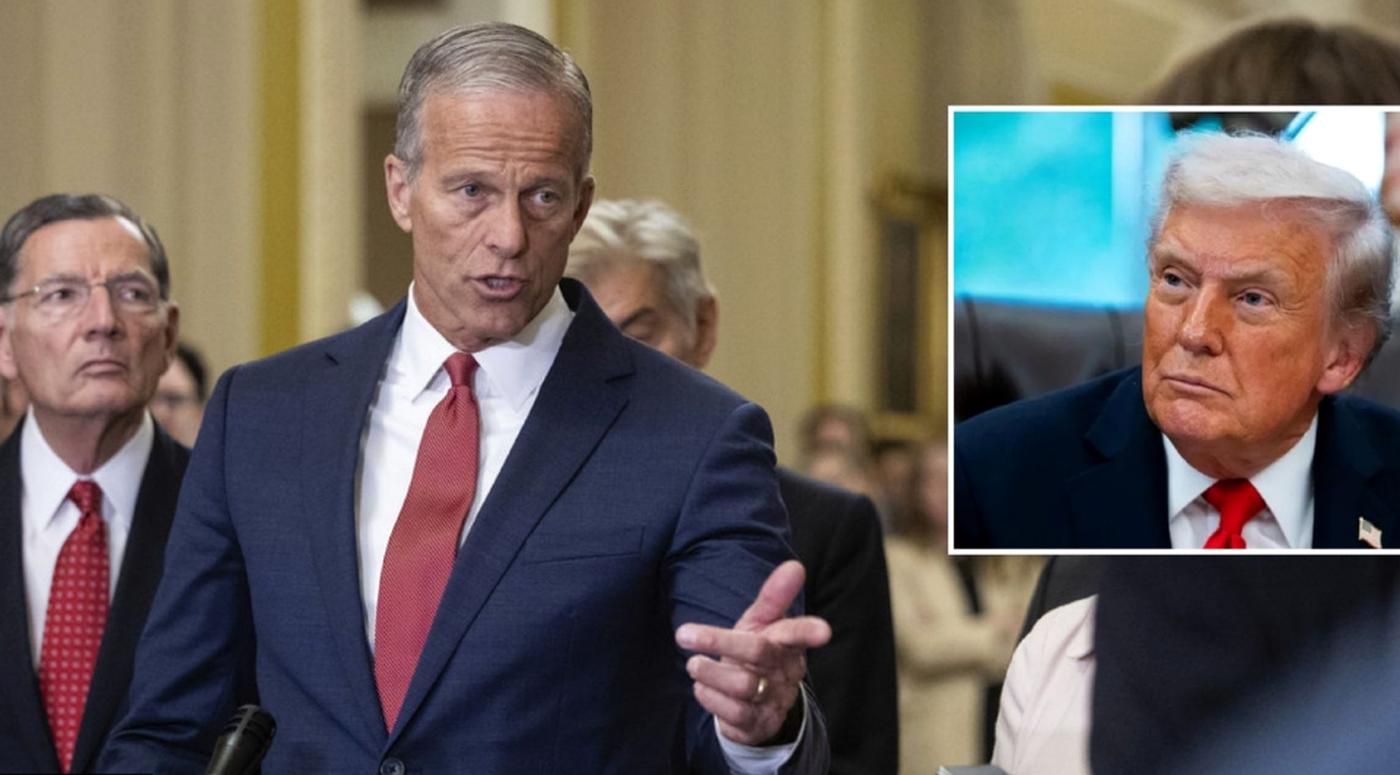
Senate Republicans moved another step closer toward reducing the backlog of nominees submitted by President Donald Trump.
The upper chamber confirmed 49 of Trump’s nominees on Monday, bringing the administration to roughly 60% confirmation of its civilian appointments. It also marked the fourth time Republicans have approved a large batch of nominees at once since changing Senate confirmation rules last year.
Also included among the confirmed nominees was Stevan Pearce, Trump’s choice to lead the Bureau of Land Management. Senate Democrats spent much of last year slowing or blocking confirmation votes on many nominees.
Historically, many civilian appointments had been approved without requiring lengthy floor debates or formal roll-call votes. Republicans argued that opposition led by Senate Minority Leader Chuck Schumer (N.Y.) was intended to prevent Trump from reshaping the federal government around his policy priorities, prompting the GOP to invoke the so-called “nuclear option” and change Senate procedures.
The latest group included appointments to 20 different categories of positions, including a dozen U.S. attorneys, several U.S. marshals, ambassadors, and officials serving across multiple federal agencies and departments, including the departments of War, Transportation, and Energy, according to multiple reports
The move has been successful for Republicans who confirmed more than 400 Trump picks last year, Fox News reported.
The confirmation total also surpassed Trump’s first-term pace, when he had secured confirmation for 323 nominees during the same period of his presidency. I
At the same time, Republicans are working to finalize another major piece of Trump’s agenda: a long-term funding package for immigration enforcement operations over the next three-and-a-half years.
The move — the fourth use of the nuclear option in Senate history — lowered the threshold for advancing certain nominees from the traditional 60 votes needed to overcome a filibuster to a simple majority vote
Republicans are moving quickly through the budget reconciliation process to pass a $72 billion funding package for the U.S. Immigration and Customs Enforcement and the United States Border Patrol by June 1. GOP lawmakers are aiming to complete work on the measure before the end of the week, as Congress is scheduled to leave Washington for the Memorial Day recess next week.
🚨 BREAKING: The US Senate has just confirmed a whopping 49 TRUMP NOMINEES in one fell swoop, 46-43
— Eric Daugherty (@EricLDaugh) May 18, 2026
The long list includes crucial US ATTORNEYS for law and order 🔥
LFG! In one vote, the en bloc nominations are 100% confirmed 🇺🇸
Now confirm the rest of his judicial nominees! pic.twitter.com/CIZC6LFI4P
Meanwhile, a Republican bill proposing $1 billion for the Secret Service to help finance President Donald Trump’s White House ballroom is at risk due to opposition from a senior Senate official, Parliamentarian Elizabeth MacDonough.
The bill seeks funding for ICE and Border Patrol in addition to the $1 billion for the ballroom and must be revised to address jurisdictional concerns, according to multiple reports.
t also exceeded the pace set by then-President Joe Biden, who had 365 nominees confirmed over a comparable timeframe
“As drafted, the provision inappropriately funds activities outside the jurisdiction of the Judiciary Committee,” they added. MacDonough determined that the bill would be subject to the chamber’s 60-vote threshold, meaning it cannot pass with a simple majority, as some legislation can under the budget reconciliation process.
Budget reconciliation is a parliamentary procedure that allows certain fiscal legislation to bypass the Senate filibuster and pass with a simple majority, though strict rules limit what policy provisions may be included, NBC News noted.
According to a Republican leadership aide cited by NBC News, Senate Republicans had already begun revising the language before Saturday’s ruling based on guidance from Senate officials.
“A project as complex and large in scale as Trump’s proposed ballroom necessarily involves the coordination of many government agencies which span the jurisdiction of many Senate committees,” Senate Democrats said after their meeting with the parliamentarian
A spokesperson for Judiciary Committee Republicans also told NBC News that “conversations and revisions are continuing, as they have been for days.”