The Iran–U.S. strike threat has created deep uncertainty in global geopolitics during March 2026. The situation intensified following the confirmed death of Iran’s Supreme Leader.
For decades, tensions between the United States and Iran have developed through sanctions, proxy conflicts, and political confrontations. The current crisis, however, marks one of the most serious escalations in a generation.
In Tehran, rhetoric reportedly shifted from theoretical warnings to tactical planning. Intelligence officials now focus on reports suggesting a potential retaliatory strike against the U.S. mainland.
According to internal intelligence assessments, the first wave of action could occur as early as tonight. This possibility has pushed global security agencies into a heightened state of alert.
Intelligence Signals Behind the Threat
For the American public, the Iran–U.S. strike threat became apparent after widespread news coverage of the Supreme Leader’s death. Questions quickly arose about how Iran might respond.
Soon after, intelligence agencies reported intercepted communications and satellite imagery suggesting long-range military assets were mobilizing. These signals pointed toward a possible multi-domain assault.
Unlike previous cyberattacks or maritime incidents, analysts believe the objective may be symbolic. Experts describe the strategy as “demonstrative trauma.”
The goal would not necessarily be territorial conquest. Instead, the strike could aim to prove that the American homeland is not unreachable.
Potential Strategic Targets in the United States
Military analysts continue evaluating possible targets linked to the Iran–U.S. strike threat. Their focus centers on locations that combine symbolic and operational importance.
-
The East Coast corridor between Washington, D.C., and New York City remains a key psychological target due to political and financial influence.
-
Potential targets also exist along the West Coast, including California and Washington, which host major naval operations and satellite command centers.
Disrupting these installations could slow military coordination and delay an organized response from the United States.
Energy Infrastructure and Economic Impact
Strategic planners also consider the energy sector when evaluating the threat. The Gulf Coast and Texas serve as key hubs of U.S. energy production.
Damage in these regions could disrupt global energy markets and affect domestic power infrastructure.
The United States operates advanced missile defense systems, including the Aegis Combat System and the Terminal High Altitude Area Defense (THAAD) system.
However, analysts warn that a coordinated swarm-style attack could test these defenses. Even sophisticated interception networks face limitations during large-scale assaults.
Public Anxiety and Government Response
Across the U.S., the threat has triggered widespread concern. In several cities, people rushed home or prepared emergency supplies.
Meanwhile, social media became filled with speculation and unverified reports, creating a “fog of war” environment online.
The U.S. government responded by raising defense alert levels and activating emergency broadcast systems.
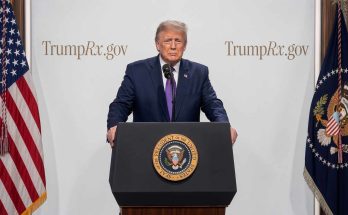
In a brief Oval Office address, the President warned that any attack would receive an overwhelming response, emphasizing a strategy of total deterrence.
A Turning Point in Global Security
The Iran–U.S. strike threat highlights how modern military technology has changed global security dynamics. Long-range missile capabilities reduce the protective advantage of geography.
For decades, the concept of “Fortress America” relied on oceans as natural barriers. Today, advanced weapons systems can reach distant targets within minutes.
As night approaches, many Americans remain on alert. Government agencies continue monitoring intelligence signals and defense systems.
Whether the threat results in action or restraint remains uncertain. However, the crisis has already reshaped public awareness of national vulnerability.
The outcome of current tensions may influence global security for years to come.