U.S. Iran War 2026 Begins With Coordinated Strikes
The U.S. Iran war 2026 began on February 28, 2026, when U.S. and Israeli forces launched coordinated strikes on Iran. Military targets included sites in Tehran, Isfahan, and Qom.
According to reports, the attacks targeted missile launchers, drone bases, and air defense systems. The operation was reportedly known as Operation Epic Fury.
Officials said the strikes aimed to address perceived threats from Iran’s missile and drone programs. The United States and Israel described the action as a pre-emptive security measure.
Reports also indicated that Iran’s Supreme Leader, Ali Khamenei, was killed during the strikes. The development marked a major escalation in regional tensions.
Military Operations Expand in U.S. Iran War 2026
The U.S. Iran war 2026 quickly expanded beyond the initial air campaign. U.S. and Israeli forces launched additional air and missile strikes on Iranian military infrastructure.
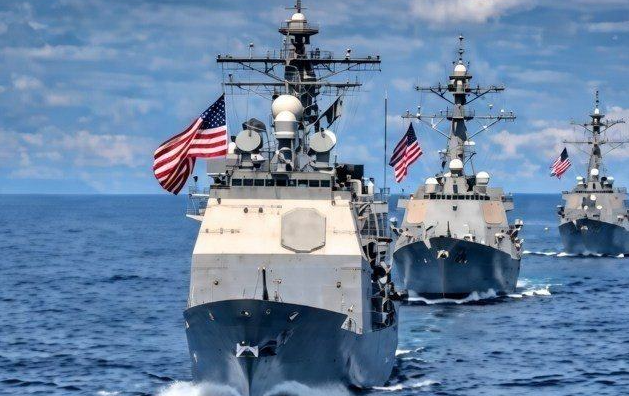
Operations reportedly involved cruise missiles and long-range bomber missions. U.S. naval forces also participated in the campaign.
Aircraft launched from the USS Abraham Lincoln supported strike operations. These missions aimed to weaken Iran’s military capabilities.
However, the conflict soon widened across multiple fronts. Iran responded with ballistic missiles and drone attacks.
Iranian Retaliation Widens U.S. Iran War 2026
Iran’s response intensified the U.S. Iran war 2026 across the region. Ballistic missiles and unmanned aerial vehicles targeted military positions and cities.
Some attacks were directed toward Israeli territory. Others targeted U.S. military bases across Gulf countries.
Reported targets included facilities in Kuwait, Bahrain, Saudi Arabia, Qatar, and the United Arab Emirates. Many missiles were intercepted by air defense systems.
However, several strikes reportedly caused casualties and infrastructure damage. The use of long-range drones also expanded the scope of the conflict.
Regional Fronts Open During U.S. Iran War 2026
The U.S. Iran war 2026 has expanded beyond direct confrontation between states. Iranian-aligned groups have become involved in several areas.
Militias linked to Iran have reportedly engaged U.S. forces in Iraq. Fighting occurred in locations such as Jurf al-Sakhar and al-Qaim.
Meanwhile, the Lebanese group Hezbollah launched attacks toward northern Israel. These actions further broadened the regional conflict.
Additionally, regional airspace disruptions affected commercial flights. Airlines resumed some operations but maintained heightened caution.
Global Reactions to the U.S. Iran War 2026
The U.S. Iran war 2026 has drawn mixed reactions from governments and international institutions. Several allies expressed concern about escalating hostilities.
The United Nations called for diplomacy and restraint. Officials warned that continued fighting could destabilize the region.
Meanwhile, countries including China urged ceasefire negotiations. Diplomatic discussions continue among global powers.
The conflict has also affected global markets. Oil prices rose above $100 per barrel amid concerns about supply disruptions near the Strait of Hormuz.