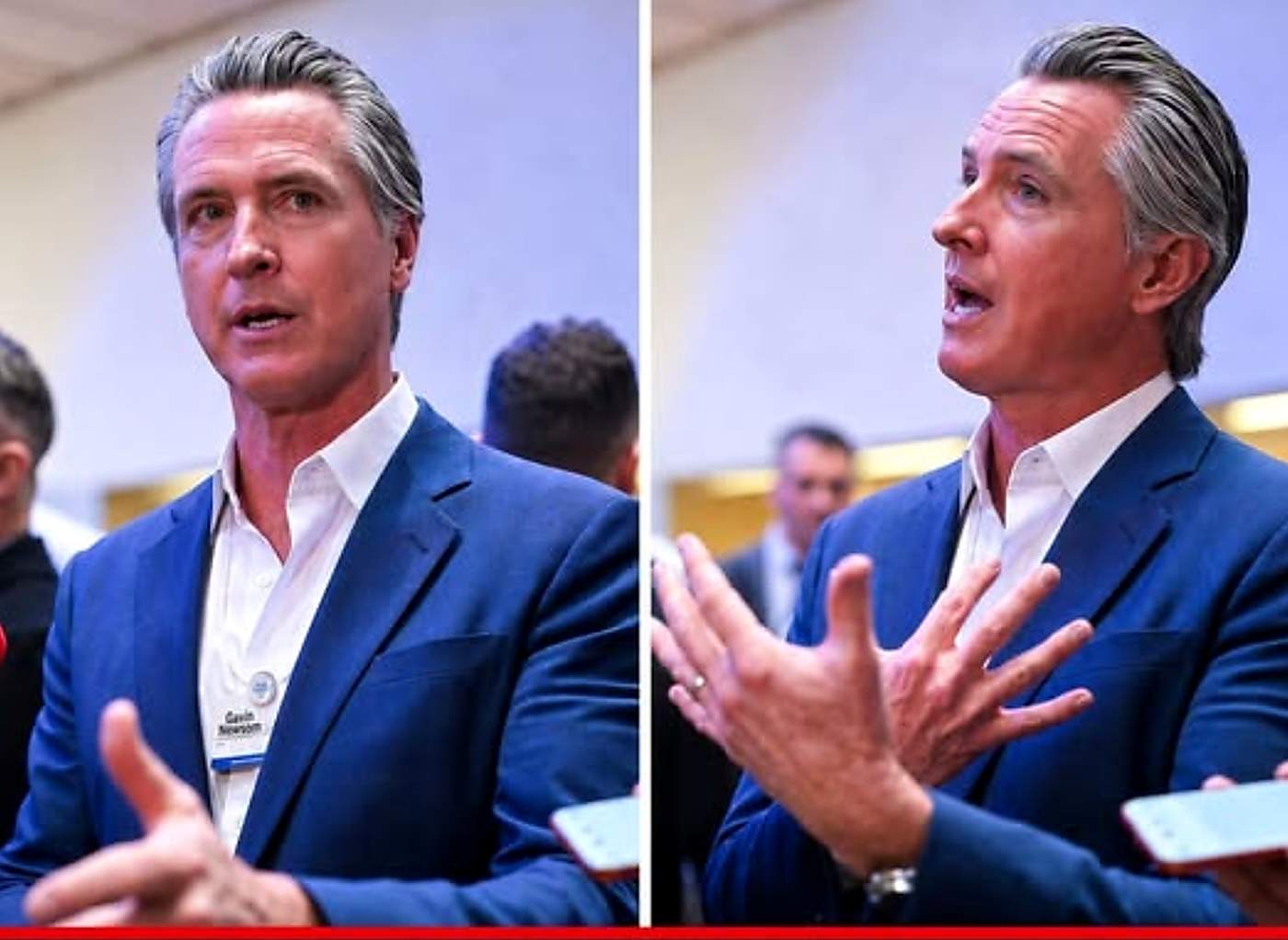
Gavin Newsom, the governor of California, infuriated his left-wing supporters late last week.In defiance of progressive organizations that wanted the protections permanently incorporated into state law, Newsom vetoed legislation that would have strengthened California’s standing as a legal sanctuary for abortion providers and providers of gender-related medical care.
Assembly Bill 2164, which would have forbidden California governors from extraditing individuals charged by other states with crimes involving gender-related or reproductive health care that is permitted in California, was rejected by Newsom.
The Democratic governor claimed that rather than disagreeing with California’s more comprehensive protections for abortion and transgender medical care, his objection was focused on upholding the governor’s constitutional authority.However, because the legislation essentially codified a policy that Newsom had established through executive order in 2022, abortion-rights organizations were taken aback by his decision.
According to that policy, extradition requests pertaining to legal reproductive health care in California must be denied by California officials.
The matter has evolved from a theoretical legal dispute to a real interstate conflict.Louisiana requested the extradition of a California doctor earlier this year for allegedly using telehealth to prescribe abortion medication to a Louisiana patient.
The request was previously turned down by Newsom.
At the time, Newsom declared, “Louisiana’s request is denied.” Since 2022, my stance on this has been unambiguous: We will not permit radical politicians from other states to enter California and attempt to penalize physicians for allegedly providing reproductive health care services.
By incorporating those safeguards into state law, AB 2164 would have restricted future governors’ ability to alter them.
Because of the veto, California’s existing protections are maintained while Newsom is governor; however, his successor may handle extradition requests differently.
Abortion rights organizations are concerned about that possibility.
Abortion providers are still “just one election away from extradition,” according to Pavitra Abraham, state campaigns director for Reproductive Freedom for All.
The bill’s proponents contend that providers shouldn’t be forced to rely on the political beliefs of the governor.For a different reason, AB 2164 opponents applauded Newsom’s ruling.
The legislation, according to a number of groups opposed to gender-related medical interventions for minors, might have shielded California physicians from liability when their patients resided in states that prohibited such treatments.
Both “reproductive health care services” and “gender affirming health care services” were covered by the law.
The Full Faith and Credit Clause and states’ obligations to recognize certain legal proceedings that originate elsewhere were other constitutional issues brought up by critics.
Advertisement
Newsom’s veto does not signify a more comprehensive overhaul of California’s abortion laws.
Since the Supreme Court reversed Roe v. Wade in 2022, California has passed a vast array of shield laws.
These laws limit collaboration with state-initiated investigations and legal actions that aim to penalize abortion providers for actions that are legal in California. In 2025, Newsom reinforced those safeguards once more.
Among other things, he signed AB 260, which increased protections for healthcare professionals who prescribe abortion drugs and permitted physicians to write prescriptions for the drugs under specific conditions without putting their names on the labels.
Because abortion medication can cross state lines without the patient or doctor having to travel, California’s shield laws have grown in significance.
Through telehealth, physicians in states like California and New York can prescribe mifepristone and mail the drug to patients who reside in states with severe restrictions on abortion.Providers who are physically located in New York and offer telehealth reproductive health care to patients outside the state are specifically protected by the state’s shield law.
A constitutional conflict between states has emerged as a result of this practice.
The stakes are demonstrated by Louisiana’s ongoing challenge to the Food and Drug Administration’s mifepristone regulations.
Claiming that the FDA improperly relaxed safeguards that previously required more in-person medical supervision, Louisiana and other challengers are calling for stricter federal restrictions on the abortion medication.
Arguments in the case were recently heard by a three-judge panel of the Fifth U.S. Circuit Court of Appeals.
The FDA’s current regulations allow telehealth prescriptions and mail-order delivery of mifepristone, which greatly simplifies the process for providers in shield-law states to prescribe the drug to patients in other states.
Louisiana contends that its ability to implement its own abortion laws is hampered by those federal regulations.