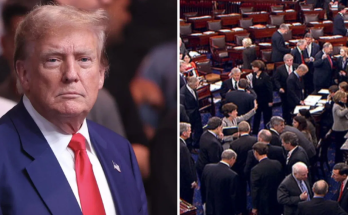
The U.S. House of Representatives has voted 213 to 184 to pass legislation aimed at speeding up federal
permitting for interstate natural gas pipelines. The bill would designate the Federal Energy Regulatory Commission as the lead
agency for pipeline permitting reviews.
Under the legislation, FERC would be allowed to consider water quality assessments as part of its environmental review,
rather than waiting for separate Clean Water Act certifications from states.
Supporters say state-level certifications have often delayed pipeline approvals for years. The bill is titled the Improving Interagency
Coordination for Pipeline Reviews Act. It is one of several measures in Congress aimed at accelerating federal permitting
processes.
Another bill, the Promoting Efficient Review for Modern Infrastructure Today Act, also passed the House with bipartisan support.
Lawmakers have made broad permitting reform a priority as they seek to expand energy infrastructure to meet rising
electricity demand.
That demand has grown in part due to the rapid expansion of data centers across the country. Supporters
of the legislation also argue that faster permitting could help reduce household energy costs, particularly by enabling quicker
construction of energy projects that can increase supply and competition in the market.
The agency has approved most natural gas pipeline proposals that have come before it recently.
Energy Secretary Chris Wright said Friday that gasoline prices could begin falling within weeks despite a sharp spike
tied to the escalating conflict with Iran. Wright said the disruption to global oil markets is likely temporary.
“Look, Iran’s been an escalator of energy prices [for] 47 years, the whole history of their regime,” Wright
said in an interview, Newsmax reported. “We got a little bit of an interruption right now to finally
put an end to their ability to wreak havoc, to kill Americans, and to terrorize their neighbors.”
His remarks came as oil traders and drivers reacted to rising crude and gasoline prices following joint U.S.-Israeli
military operations against Iran.
Iran has also taken steps to disrupt shipping through the Strait of Hormuz. The waterway is one of
the most critical oil choke points in the world.
The strait connects the Persian Gulf to the Gulf of Oman and normally carries about 20 percent of
global petroleum liquids consumption.
Any threat to shipping through the passage can quickly impact global energy markets.
President Trump said on Friday that Iran is “totally defeated” just two weeks into the conflict with the
Islamic republic. “The Fake News Media hates to report how well the United States Military has done against
Iran, which is totally defeated and wants a deal — But not a deal that I would accept!”
he posted to Truth Social late Friday.
He made the statement near the end of the 14th day of the U.S.-Israeli military operation.
Trump did not provide any further details about a potential deal or ongoing negotiations. The update comes amid
varying perspectives on the direction and timeline of the conflict.
Shortly after the initial strikes on Iran on February 28, Trump predicted that the “major combat operations” would
be a “short-term excursion,” lasting “four to five weeks” or possibly longer. He mentioned to reporters on Friday
that the conflict would continue “as long as it’s necessary,” emphasizing that the U.S. attacks are “well ahead
of schedule.”
The administration has expressed frustration over reports that contradict its timeline or the extent of the war.
In a press conference on Friday, Defense Secretary Pete Hegseth criticized CNN for an article claiming that the
government “significantly underestimated” Iran’s willingness to close the Strait of Hormuz.
Hegseth described the article as “patently ridiculous” and “fundamentally unserious” as well as “the epitome of fake news
meant to distract.”