President Donald Trump said Friday that the conflict with Iran is nearing its conclusion, indicating that U.S. military objectives in the region are close to being achieved.
“We are getting very close to meeting our objectives as we consider winding down our great Military efforts in the Middle East,” Trump wrote on Truth Social.
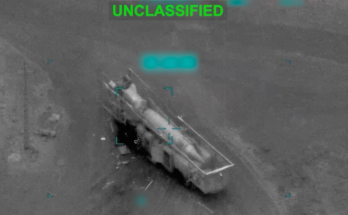
The president outlined several goals he said are nearly complete. These include degrading Iran’s missile systems, dismantling its defense production capabilities, eliminating its Navy and Air Force, preventing the regime from obtaining nuclear weapons, and protecting allied nations.
Trump also said that responsibility for securing the Strait of Hormuz should shift to allied nations that rely on the shipping route.
“The Hormuz Strait will have to be guarded and policed, as necessary, by other Nations who use it — The United States does not!” he wrote.
He added that the U.S. would assist if requested but suggested it may not be necessary once Iran’s threat is reduced.
Speaking at the White House, Trump said Operation Epic Fury, launched on Feb. 28, has significantly weakened Iran’s military capabilities.
“We’re doing extremely well in Iran,” Trump said, claiming the country no longer has a functioning navy.
He also said joint U.S. and Israeli operations have reduced Iran’s air and defense systems and disrupted its leadership structure.
“Their leaders are all gone,” Trump said, adding that leadership positions are no longer being filled.
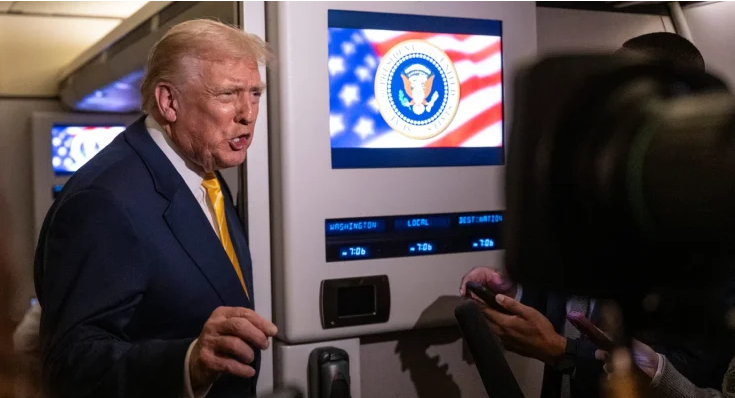
Later, Trump told reporters that Iran is “finished” from a military standpoint but noted ongoing disruptions in the Strait of Hormuz.
He described securing the waterway as manageable but called for greater support from allied nations.
Several countries, including the United Kingdom, France, Germany, Japan, and Canada, have indicated they are willing to help secure the route.
The Strait of Hormuz is a key global oil passage, with about 20% of the world’s oil supply moving through it.
Disruptions in the region have already affected energy markets.
Oil prices have increased, with Brent crude reaching around $112 per barrel and West Texas Intermediate nearing $97 per barrel.
Gas prices in the United States have also risen, averaging close to $4 per gallon.
Iran has responded to attacks on its energy infrastructure with strikes targeting facilities across the Middle East, including in Saudi Arabia, the United Arab Emirates, and Qatar.
Israel conducted a large-scale strike on Iran’s South Pars gas field, which is the largest in the world, prompting further retaliation.
These developments have raised concerns about global energy stability.
Economists warn that continued disruptions could lead to higher costs and potential supply shortages worldwide.
Amid rising tensions, Trump said Israel would avoid further strikes unless Iran targets U.S. allies again.
He added that the U.S. would respond strongly if such attacks occur.
The situation remains fluid as global attention focuses on the Middle East and its impact on energy markets.