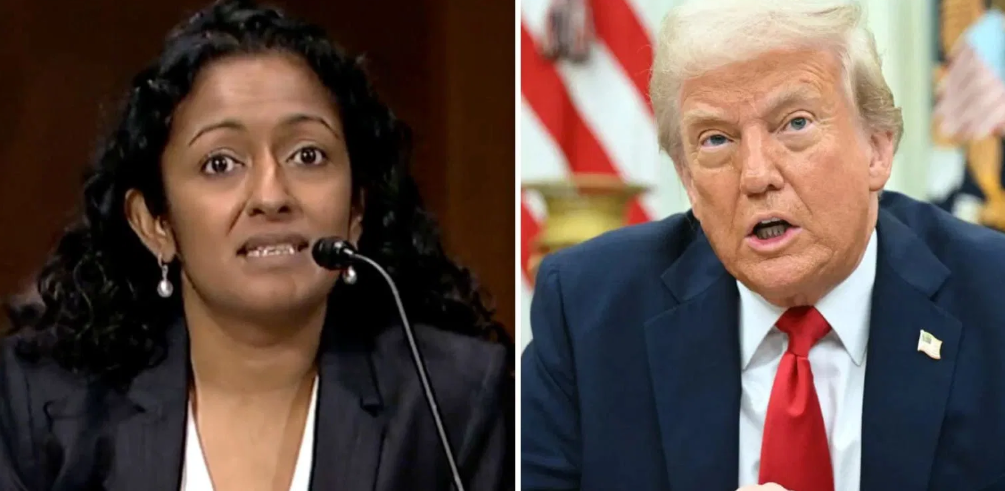
A federal judge on Tuesday temporarily blocked the Trump administration from ending deportation protections for about 200 South Sudanese nationals while a legal challenge continues.
U.S. District Judge Angel Kelley said the order does not address the merits of the case but is intended to preserve the current situation. It allows the migrants to remain in the United States while the court reviews the arguments.
Kelley wrote that an administrative stay is appropriate given the serious consequences involved and would help minimize harm while allowing time for full consideration.
The judge said a new ruling will follow after written briefs are submitted by Jan. 13.
Temporary Protected Status (TPS) allows individuals from designated countries to remain in the U.S. and obtain work authorization when returning home is unsafe due to conflict, disasters, or other conditions.
South Sudan received TPS designation in 2011 after gaining independence and has continued to face instability and violence. The U.S. State Department currently advises against travel to the country.
Court filings show that about 232 South Sudanese nationals are covered by TPS.
The Trump administration has moved to scale back the program by ending TPS for multiple countries. Legal challenges are ongoing for changes affecting Afghanistan, Cameroon, Haiti, Honduras, Myanmar, Nepal, Nicaragua, Syria, and Venezuela.
Homeland Security Secretary Kristi Noem announced that South Sudan’s TPS designation would end after Jan. 5 following a review of conditions.
The decision led to a lawsuit from TPS holders and African Communities Together, which argues the move was unlawful. Plaintiffs claim the decision involved racial bias, lacked proper agency consultation, and did not have sufficient justification.
Kelley is expected to review those claims next month. Her interim order keeps protections in place and prevents deportations for now.
Plaintiffs urged immediate action, warning of potential irreparable harm if protections ended.
The Trump administration opposed the request, arguing that the delay in filing weakened the case and that an administrative stay should not block executive actions.
However, Kelley rejected those arguments, stating that ending TPS could lead to immediate deportations and potential loss of future immigration relief.
Separately, the U.S. Supreme Court recently ruled that federal courts cannot review visa revocations tied to sham marriages, affirming the Department of Homeland Security’s authority in such cases.
The ruling highlights DHS’s broad power over visa decisions and may affect immigration enforcement and future policy changes.