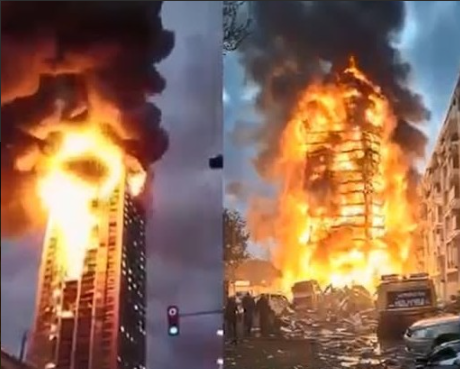
By dawn, the fire’s fury had eased into a stubborn, smoldering aftermath. The city it left behind felt suspended between two realities. Sirens faded into a distant hum, replaced by the crunch of footsteps over glass and ash.
Residents moved carefully through the ruins, searching with quiet determination. They scanned faces, doorways, and lists, preparing themselves for news they could not control—hoping for familiar names, yet fearing the worst.
Amid the destruction, however, something remained unbroken. Small acts of unity began to appear. Power cords stretched between neighboring windows. Fold-out tables lined the sidewalks, covered with water, blankets, and hot food.
Exhausted firefighters walked through streets where people greeted them with gratitude, like returning heroes. No one was ready to call it hope—not yet.
But as families found each other in crowded shelters and volunteers worked tirelessly to connect needs with help, a different story began to emerge. It was not just about the night everything burned.
It was about the morning after—when people chose, together and without hesitation, to stay, to help, and to rebuild.